Inside Solid State Marine | The Future of Batteries for Boats
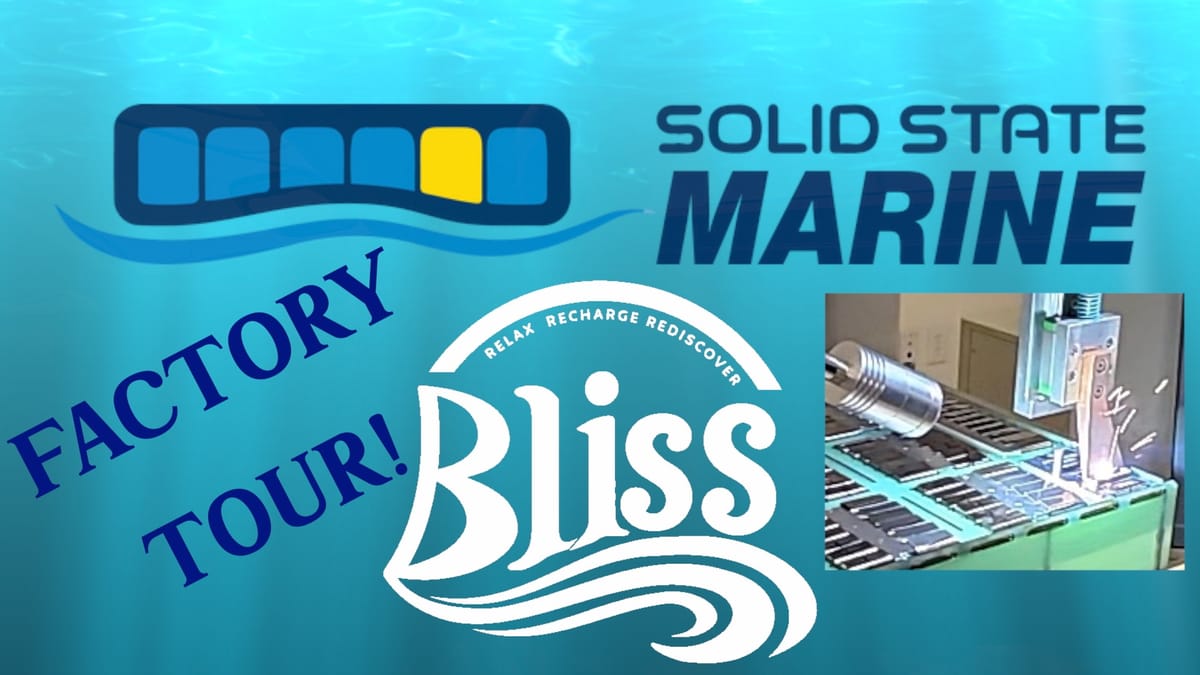
Last week I had the opportunity to visit Solid State Marine for an exclusive factory tour with Founder & CEO Tom Calef. This was one of the most fascinating deep dives I’ve ever done into marine technology, because it wasn’t just about batteries — it was about the future of energy at sea.
From the moment we stepped into the cleanroom, to watching laser welding and hands-on assembly, I was blown away by how much precision goes into building a truly safe, long-lasting marine battery.
⚡ Why Solid State Batteries Matter for Boating
Most of us are familiar with traditional lead-acid or lithium iron phosphate (LiFePO₄ / LFP) batteries. They’ve powered our boats for decades — but they also come with limits: weight, safety concerns, and shorter lifespans.
Tom explained how solid-state technology changes the game:
- Higher energy density (more power in less space).
- Better safety (reduced fire risk vs lithium).
- Longer lifespan (thousands of cycles — tested up to 3,500).
- Integration with marine systems like Victron and NMEA2000.
For cruisers, liveaboards, and anyone off-grid, that means more reliable power, less maintenance, and fewer compromises.
🎥 Watch the Full Tour
You can watch the entire factory tour here, including Tom’s explanations and all the behind-the-scenes footage:
🔬 Behind the Scenes at the Factory
The tour gave me a behind-the-scenes look at every step of the process:
- Cell construction in the cleanroom – precision at the smallest level.
- Packing & structure – how cells are arranged for durability.
- Laser welding & quality control – ensuring long-term reliability.
- Battery management system (BMS) – monitoring performance & safety.
- Stress testing – simulating extreme marine conditions.
I was especially fascinated at how graphene plays a role in the design, and the way they’re tackling dendrite formation — one of the biggest challenges in battery chemistry.
🛠️ Real-World Implications for Cruisers
As a sailor myself, I immediately thought about what this could mean aboard Bliss:
- More solar efficiency with a bigger energy buffer.
- Longer stretches off-grid without a generator.
- A real step forward in safety at sea, especially compared to lithium-ion risks.
This isn’t just about having more power — it’s about making boat life simpler, safer, and more sustainable.
🌊 Final Thoughts
Whether you’re a cruiser, liveaboard, or weekend sailor, the way we think about marine energy is about to change. Solid-state batteries aren’t just a lab experiment anymore — they’re being designed and built specifically for our environment.
Huge thanks to Tom Calef and the Solid State Marine team for letting us take a peek behind the curtain!
Follow me on noforeignland!